
Understanding the Role of Area Rugs in Interior Design
Finding the best area rug for your home begins with understanding how these versatile floor coverings function within a space. Unlike wall-to-wall carpeting, area rugs serve as movable foundations that anchor furniture, define distinct zones within an open-concept layout, and introduce layers of texture and color. When you select the right rug, it can visually tie disparate design elements together, making a room feel cohesive and intentional rather than cluttered or fragmented. Furthermore, rugs provide essential acoustic benefits by absorbing sound in rooms with hard flooring surfaces like hardwood, tile, or laminate.
Beyond aesthetics and acoustics, area rugs contribute significantly to physical comfort and warmth underfoot. Walking across cold hardwood floors during winter mornings can be unpleasant, but a well-placed rug offers a soft, insulating barrier that retains heat and cushions your steps. This makes them particularly valuable in bedrooms and living rooms where people spend extended periods relaxing. Additionally, high-traffic areas benefit greatly from rugs because they absorb daily wear and tear, protecting the underlying flooring material from scratches, scuffs, and excessive fading caused by direct sunlight streaming through windows.
Evaluating Materials and Fiber Types
The material of your rug dictates its durability, feel, and suitability for specific environments within your household. Natural fibers such as wool, cotton, jute, and sisal are perennial favorites due to their organic appeal and sustainable qualities. Wool is widely considered the gold standard for high-traffic zones because it possesses natural lanolin that resists stains, offers incredible resilience, and maintains its plush texture for decades. Cotton is softer and easier to launder, making it ideal for casual spaces like laundry rooms, nurseries, and smaller accent areas where frequent cleaning is necessary.
On the other hand, synthetic fibers including polypropylene, polyester, and nylon offer exceptional practicality, particularly for budget-conscious homeowners or busy households with children and pets. Polypropylene, also known as olefin, is inherently moisture-resistant and fade-resistant, making it a popular choice for both indoor and outdoor settings. Nylon boasts superior strength and elasticity, bouncing back quickly under heavy furniture and foot traffic. Evaluating your household lifestyle and the specific demands of each room will guide you toward the fiber composition that delivers the best longevity and performance.
Mastering Rug Sizing and Furniture Placement
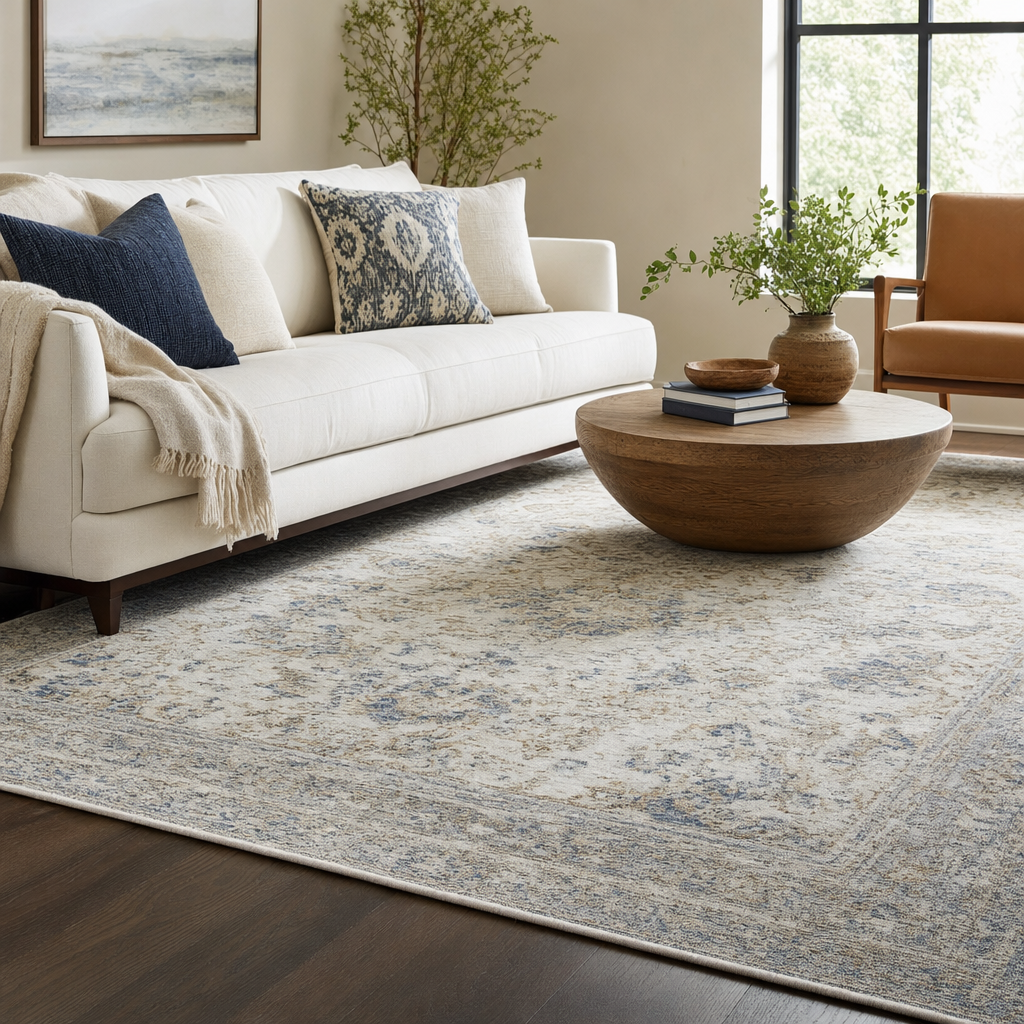
Choosing the correct dimensions is often the most critical factor in determining whether an area rug looks properly integrated or awkward in a room. A common mistake is purchasing a rug that is too small, which can make the surrounding space feel disjointed and cramped. In living rooms, the ideal arrangement typically involves placing all furniture legs entirely on the rug, or at least ensuring the front legs of sofas and armchairs rest comfortably upon the surface. This creates a unified conversation area and visually expands the perceived boundaries of the seating arrangement.
For dining areas, the rug needs to be significantly larger than the table itself to accommodate chairs even when they are pulled out for seating. A general rule of thumb is to allow at least twenty-four inches of extra rug space on all sides of the dining table so that chair legs do not catch on the edge when guests sit down or stand up. In bedrooms, placing a large rug underneath the bed perpendicular to the frame creates a soft landing pad on both sides, while runners alongside the bed offer a practical and stylish alternative for smaller sleeping quarters.
Consider these essential layout principles when planning your room design:
- Leave a consistent border of exposed flooring, typically eight to twenty-four inches, between the rug edge and the baseboards.
- Ensure high-traffic pathways remain clear of curled rug corners to prevent tripping hazards.
- Use painter’s tape on the floor to outline potential rug dimensions before making a final purchase.
- Align rectangular rugs parallel to the longest walls to maintain visual balance.
Pile Height, Construction, and Texture
Pile height refers to the thickness of the rug fibers, and it plays a major role in both comfort and maintenance. Low-pile rugs, including flatweaves, dhurries, and kilims, have tight, dense loops or flat surfaces that do not trap dirt easily. This makes them exceptionally easy to vacuum and clean, rendering them ideal for entryways, kitchens, and dining rooms where crumbs and spills frequently occur. Furthermore, low-pile options slide easily beneath doors without blocking their swing path, offering practical utility in tight hallways and mudrooms.
Conversely, high-pile and shag rugs offer luxurious plushness and warmth, making them wonderful additions to low-traffic bedrooms and cozy reading nooks. However, their loose, tall fibers trap dust, pet hair, and small debris, requiring more frequent and careful vacuuming without a rotating brush roll that can pull threads. Construction methods also matter: hand-knotted rugs represent artisan craftsmanship and unmatched durability, while machine-tufted and power-loomed rugs provide accessible, high-precision patterns at a fraction of the cost and production time.
Proper Maintenance and Care Essentials
Maintaining your area rug properly ensures it retains its visual appeal and structural integrity over many years of use. Regular vacuuming is the cornerstone of rug care, preventing abrasive dirt particles from settling deep into the foundation fibers where they can cut and weaken the yarn over time. When vacuuming fringed edges or delicate flatweaves, use the suction-only attachment to avoid catching threads in the roller brush. Rotating your rug every six to twelve months also prevents uneven fading from sunlight exposure and distributes foot traffic wear more evenly across the surface.
Spills and stains demand immediate attention to prevent permanent discoloration, but the cleaning method must match the fiber type. Blot liquid spills gently with a clean, white cloth or paper towel rather than rubbing, which pushes the liquid deeper into the pile and spreads the stain. Water combined with a mild dish soap is usually sufficient for synthetic materials, whereas natural fibers like wool or sisal may require specialized cleaning solutions to avoid water rings or shrinkage. Investing in a quality rug pad underneath also prevents slipping, adds cushioning, and improves air circulation to protect your flooring.
Frequently Asked Questions
What size area rug should I put in a standard living room?
In a standard living room, an 8×10 or 9×12 foot rug is usually ideal. It should be large enough for the front legs of your sofa and armchairs to rest comfortably upon it, anchoring the furniture grouping together.
Are rug pads really necessary underneath area rugs?
Yes, rug pads are highly recommended because they prevent the rug from sliding on hard floors, reduce tripping hazards, add extra cushioning underfoot, and protect your flooring finish from potential color transfer and friction.
How do I clean a high-pile or shag rug without damaging it?
Clean high-pile rugs by vacuuming with the beater bar or rotating brush turned off to prevent pulling fibers. Shake smaller rugs outside occasionally, and spot-clean liquid spills immediately by gently blotting with a clean cloth.
Which rug materials are best for homes with pets?
Synthetic fibers like polypropylene and nylon, as well as tightly woven natural wool, are best for pet owners. They resist moisture, clean easily, and withstand frequent vacuuming without showing excessive wear or holding onto stubborn odors.
Article Was Generated By AI.