
Understanding Your Storage Needs
Before searching for the best pantry organizer, evaluating your specific kitchen habits and spatial limitations is an essential first step. Every household stores a different mix of dry goods, canned items, baking supplies, and snacks, meaning a generic solution rarely works for everyone. Take time to empty your shelves completely, grouping items by category to see what you actually own and use regularly. This audit helps you identify pain points, such as expired items hiding in the back or bulky cereal boxes taking up disproportionate vertical space. Assessing your family’s daily routines ensures that whatever storage system you implement will genuinely support your lifestyle rather than creating new inconveniences during meal preparation.
Physical dimensions play an equally critical role when planning an effective pantry setup. Measure the depth, height, and width of your shelving units multiple times to avoid purchasing containers or risers that do not fit properly. Note the placement of interior doors, electrical outlets, or structural studs that might limit how far bins can slide or where racks can be mounted. Walk-in pantries require different layout strategies compared to narrow cabinet pantries or pull-out pantry towers found in modern apartments. By mapping out your space accurately on paper before shopping, you save both time and money, ensuring every square inch of your storage area is utilized efficiently without causing physical clutter or obstructed pathways.
Core Categories of Storage Products
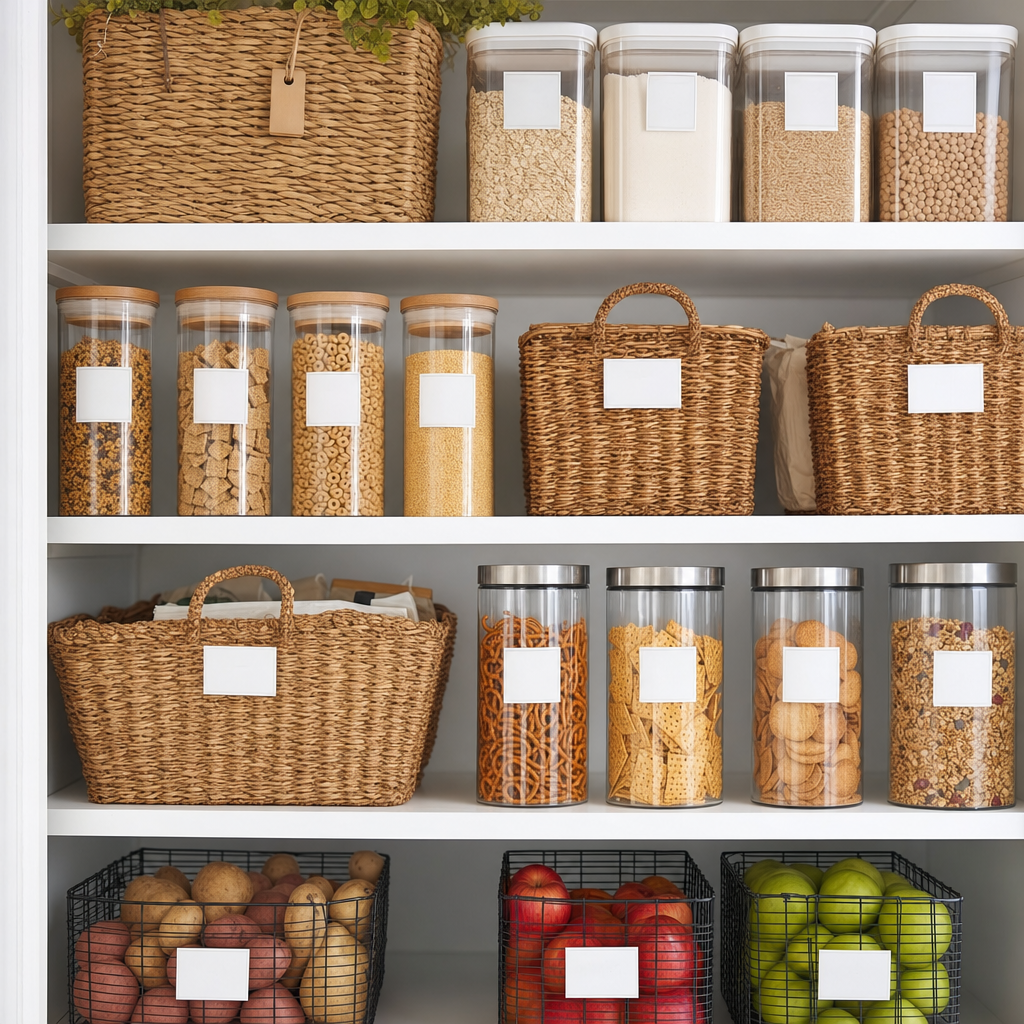
The market offers a wide variety of organizational tools, each designed to tackle specific pantry challenges. Clear acrylic or glass canisters are exceptionally popular for decanting dry goods like flour, sugar, pasta, and rice. These containers protect food from pests while allowing you to instantly see when supplies are running low. Turntables, often called Lazy Susans, work wonders in deep corner shelves or tight spaces by bringing items stored in the back directly to the front with a simple spin. Meanwhile, tiered shelf risers elevate canned goods and spice jars so you can view every label simultaneously without knocking over front-row items while searching for a specific ingredient.
Wire baskets and fabric bins provide another layer of functionality, especially for corralling loose, awkwardly shaped items that lack uniform packaging. Snacks, seasoning packets, baking accessories, and produce all benefit from being grouped inside designated bins. Many homeowners utilize over-the-door organizers to maximize neglected vertical space on the reverse side of pantry doors. These hanging racks hold lightweight items like foil, plastic wrap, condiments, and cleaning supplies, freeing up valuable interior shelf space. Selecting the right combination of these products depends entirely on the types of food you buy most frequently and the structural layout of your existing kitchen cabinetry.
Material Considerations and Durability
Choosing the right materials for your storage accessories impacts both visual appeal and long-term functionality. Plastic and acrylic products are lightweight, shatter-resistant, and easy to wipe clean with a damp cloth if a spill occurs. However, lower-quality plastics may scratch easily or discolor over time when exposed to certain oils or strong sunlight. Bamboo and wooden organizers offer a warm, natural aesthetic that elevates the look of open pantries, but they require proper sealing to prevent moisture absorption or warping in humid kitchen environments. Stainless steel and coated wire options provide exceptional strength, making them ideal for heavy items like canned goods and cast-iron cookware.
Maintenance requirements also influence which products will serve you best over the coming years. Consider how often you will need to remove, wash, and refill your containers during routine kitchen deep cleaning. Smooth surfaces without intricate crevices are significantly easier to sanitize and maintain than woven baskets or wire grids with tight welded joints. Furthermore, matching your organizational materials creates a cohesive, intentional visual flow that makes the entire pantry feel calmer and more accessible. Balancing durability, ease of maintenance, and aesthetic preference ensures your storage investment remains practical and visually pleasing for a very long time.
Step-by-Step Implementation Strategy
Transforming a cluttered pantry into a streamlined space is best approached as a sequential project rather than an overwhelming single task. Following a structured method prevents fatigue and ensures you do not abandon the project halfway through when things become messy. Start with a clean slate, wipe down every shelf thoroughly, and evaluate your storage accessories before putting anything back inside. Grouping items logically and placing frequently used goods at eye level will drastically improve your kitchen efficiency every single day.
- Empty the entire pantry completely and wipe down all interior shelves.
- Sort every food item into categories, checking expiration dates and discarding expired goods.
- Measure available shelf heights and depths to ensure your storage products will fit.
- Place heavy items on lower shelves and daily essentials at comfortable eye-level zones.
- Decant dry goods into airtight containers and label them clearly with contents and dates.
After establishing your zones and placing your primary organizational units, take a few days to live with the new system. You may notice that certain items feel slightly out of place or that a particular bin is awkward to access during busy weeknight cooking sessions. Minor adjustments are completely normal during this breaking-in period. Fine-tuning your layout ensures that the setup adapts smoothly to seasonal cooking habits, grocery shopping changes, and family preferences over time.
Maintenance and Long-Term Success
Establishing a well-organized pantry is a fantastic achievement, but maintaining that system requires intentional, ongoing habits. Schedule a quick fifteen-minute maintenance check every month to wipe up minor crumbs, check expiration dates, and return stray items to their designated zones. When bringing home new groceries from the store, practice the first-in, first-out rule by sliding older items to the front and placing newer purchases behind them. This simple grocery management habit prevents food waste and ensures you never accidentally purchase duplicates of items you already own.
Involving other members of your household is another crucial factor in keeping the pantry tidy over the long term. Clear labeling is the single most effective tool for encouraging family participation, as it removes guesswork regarding where items belong. When everyone in the house knows that cereal goes in the large square bin and snacks live in the lower wire basket, maintaining order becomes a shared responsibility rather than a burden for one person. Periodic reviews of your storage setup ensure the pantry continues to meet your evolving needs as recipes, dietary habits, and family sizes change.
Frequently Asked Questions
What is the best way to organize a deep pantry shelf?
Deep shelves often cause items to get lost in the back. Using turntables, pull-out bins, or tiered risers allows you to access items stored in the rear without having to remove everything in front of you.
Should I decant dry goods into clear containers?
Decanting dry goods into airtight containers helps keep pests out, keeps food fresh longer, and lets you see inventory levels at a glance. However, it requires extra effort to wash containers and manage refill cycles.
How can I maximize storage space in a small pantry?
Maximize small pantries by utilizing vertical space with shelf risers, hanging over-the-door organizers, and using stackable rectangular bins instead of round containers which leave wasted gaps.
How often should I clean out and reorganize my pantry?
Conduct a quick tidy-up monthly and a deep cleaning, including wiping shelves and checking expiration dates, every three to six months to keep your system running smoothly.
Article Was Generated By AI.