
Understanding Your Storage Needs
Before searching for the best closet organizer, you must conduct a thorough inventory of your belongings to understand your exact storage requirements. Many people purchase generic shelving systems only to discover they have too many long garments and not enough folded shelf space, or an excess of shoes with nowhere proper to put them. Take everything out of your closet, sort items into categories like hanging clothes, shoes, accessories, and seasonal gear, and measure the volume of each category. This foundational step prevents buying a system that fails to accommodate your actual wardrobe reality.
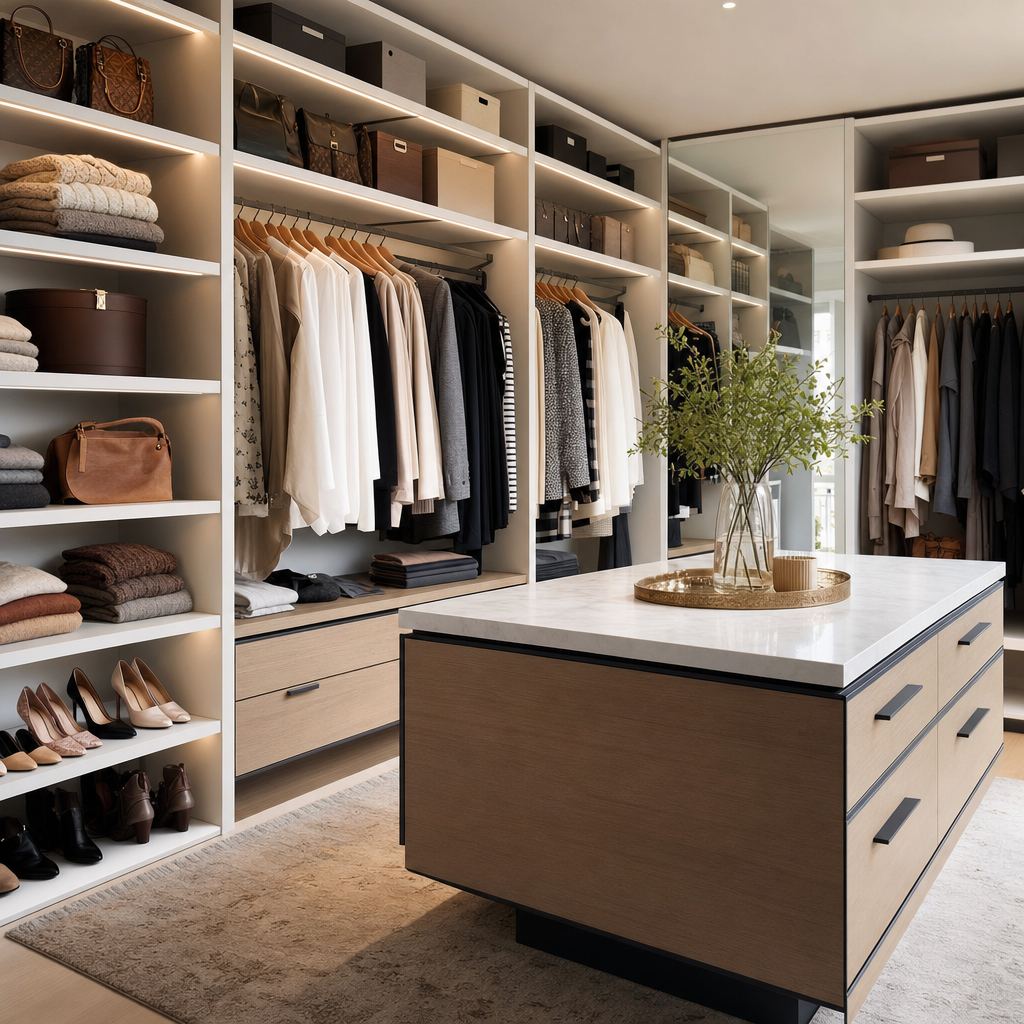
Different spaces demand entirely different layout strategies based on their physical dimensions and architectural quirks. A walk-in wardrobe requires a multi-zone approach with hanging rods at varying heights, corner shelving units, and central drawer islands if space permits. Conversely, a standard reach-in closet measuring just a few feet wide relies on vertical maximization, utilizing every inch from floor to ceiling to prevent clutter from spilling outward. Assessing your room layout early ensures you select organizers that respect architectural limitations while drastically improving overall capacity and accessibility.
Comparing Material Types and Durability
When evaluating materials for a closet organizer, wood and laminate products offer a polished, furniture-grade aesthetic that elevates the entire bedroom environment. Solid wood provides exceptional strength and a timeless look, though it comes at a higher price point and requires careful humidity management. Melamine and laminated wood composites represent the most popular middle-ground choice, balancing affordability with moisture resistance and a wide array of color finishes. These engineered surfaces resist scratching and wiping clean easily, making them a practical choice for busy households managing daily wardrobe traffic.
Wire and metal systems present a durable, industrial alternative that prioritizes ventilation and modular flexibility above all else. Steel wire coated in vinyl or epoxy withstands heavy loads without sagging and prevents mold growth by allowing air to circulate freely around damp garments or stored linens. Furthermore, metal track-based systems allow you to reposition shelves, baskets, and hanging rods effortlessly as your wardrobe shifts between seasons or your family grows. While wire designs lack the seamless, built-in appearance of wood laminate cabinetry, their adjustability remains unmatched for dynamic storage spaces.
Fixed Versus Modular Systems
Fixed storage systems are permanently anchored to your walls, providing a rigid, sturdy structure that mimics custom-built cabinetry without the custom price tag. Once installed, these wooden or metal units stay firmly in place, supporting substantial weight loads of winter coats, heavy boots, and stacked storage bins without wobbling. Homeowners often prefer fixed configurations for master bedrooms or permanent guest rooms where the layout requirements will remain stable over many years. The primary trade-off is inflexibility; changing a shelf height later often requires patching drywall and drilling entirely new anchor holes.
Modular systems operate on a horizontal hang-track mechanism, where vertical standards snap into a single rail mounted securely to the top wall studs. This clever engineering distributes the weight load safely across multiple wall studs while allowing you to click shelves, shoe racks, and drawers into any position along the vertical standards. Modular configurations excel in children’s bedrooms, rental properties, or guest spaces where storage needs evolve rapidly over time. You can easily lower a clothes rod as a child grows or add an extra shelf tier whenever your shoe collection expands.
Essential Features and Accessories
Integrating specialized accessories transforms a basic closet organizer into a high-performance storage center tailored to your daily habits. Pull-out belt racks, velvet-lined jewelry trays, and tilt-out laundry hampers keep small accessories organized and prevent them from disappearing into the back of deep shelves. Shoe storage deserves special attention; angled shelves with toe rails showcase your footwear collection clearly, while pull-out wire drawers keep flats and sandals neatly contained and easily accessible from a seated position.
Lighting is another crucial feature that dramatically improves the usability of any closet organizer, especially in walk-in spaces lacking natural windows. Integrated LED light strips recessed beneath shelves or inside hanging rod channels illuminate dark corners, making color matching and outfit selection significantly easier. Motion-activated sensors ensure the lights turn on automatically when you slide open the door and switch off when you leave, combining convenience with energy efficiency. Thoughtful lighting upgrades elevate a standard wire or wood system into a luxurious dressing area.
Planning and Installation Guidelines
Accurate measuring is the absolute most critical step before ordering or building any closet organization system in your home. Measure the width, height, and depth of the interior space at multiple points, noting the exact locations of baseboards, door swings, light switches, and air vents. Creating a scaled drawing on paper or using digital design software helps you visualize clearances and ensures that drawers can pull out fully without hitting adjacent walls or folded laundry stacks. Always account for door trim and uneven walls when calculating your final dimensions to avoid unpleasant installation surprises.
The installation process itself requires patience, basic household tools, and a reliable stud finder to ensure safety and structural stability. Most closet organizers derive their strength from being anchored directly into wooden wall studs rather than relying solely on drywall anchors, which can pull loose under heavy loads. If your walls are made of plaster or concrete, specialized masonry anchors or toggle bolts are necessary to guarantee secure mounting. Taking time to level every track and bracket during the initial setup prevents crooked shelves and ensures your doors and drawers operate smoothly.
Frequently Asked Questions
How much does a good closet organizer typically cost?
Basic wire and laminate kits range from fifty to two hundred dollars for DIY installation. Mid-range modular wood systems cost between three hundred and one thousand dollars, while custom professionally built closets can exceed several thousand dollars depending on materials and size.
Can I install a closet organizer myself, or should I hire a professional?
Most modular and track-based systems are designed as DIY projects requiring a drill, level, and stud finder. If you are comfortable measuring and driving screws into wall studs, you can easily complete the project in a weekend.
What is the best way to maximize space in a small reach-in closet?
Focus on vertical storage by utilizing double-hung clothing rods for shorter garments like shirts and pants. Add upper shelving for seasonal items in bins, and use slim velvet hangers to reduce the physical space each garment occupies.
Are wire closet organizers better than wooden laminate systems?
Wire systems offer superior ventilation, modular adjustability, and lower cost. Wooden laminate systems provide a high-end, furniture-like appearance with solid surfaces that prevent small items from tipping over and offer a cleaner look.
Article Was Generated By AI.