
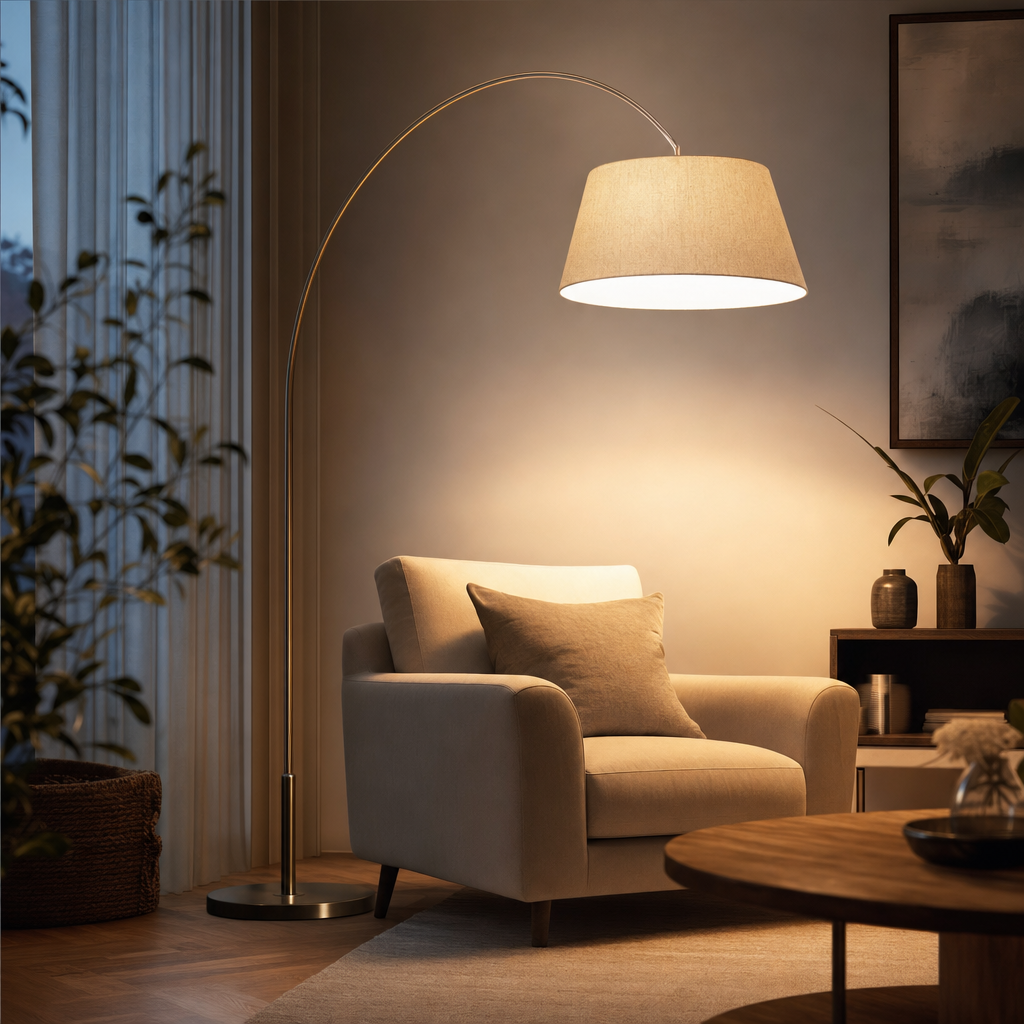
Understanding the Role of Floor Lamps in Living Room Lighting
When planning your home lighting, selecting the best floor lamp for your living room involves much more than simply finding something to brighten a dark corner. Lighting designers often talk about layering illumination, which means combining ambient, task, and accent lighting to create a balanced, welcoming atmosphere. A well-chosen floor lamp acts as a versatile workhorse in this ecosystem because it can easily be moved, adjusted, and updated without requiring any electrical wiring or professional installation. Unlike overhead fixtures that cast harsh downward light across the entire room, floor lamps introduce lower-level illumination that naturally draws the eye downward, making large spaces feel much more intimate and comfortable for everyday relaxation.
Furthermore, a tall standing light functions as a major sculptural element during daylight hours when it is turned completely off. Because living rooms serve multiple functions—ranging from hosting lively social gatherings to quiet evening reading sessions—your lighting must be equally adaptable. Floor lamps bridge the gap between fixed architectural fixtures and portable table lamps by offering substantial height and light output without taking up valuable surface area on side tables or consoles. By understanding how different fixtures distribute light upward, downward, or in all directions, you can fundamentally transform the mood and functionality of your main gathering space with just one carefully selected decorative investment.
Key Styles and Designs Available on the Market
The market offers an astonishing array of designs, making it essential to match the physical silhouette of the fixture with your room’s existing layout and decor theme. Traditional torchiere models project light straight up toward the ceiling, bouncing a soft, diffused glow back down into the room, which works wonderfully for general ambient illumination. Arc lamps feature a dramatic, curved arm that extends outward, positioning the light source directly over a sofa or armchair without requiring a ceiling junction box. Tripod fixtures add architectural interest and stability through three distinct legs, blending seamlessly into mid-century modern, bohemian, and contemporary rustic interiors alike without appearing visually heavy.
Reading lights, often referred to as club lamps or pharmacy lamps, provide focused, adjustable illumination specifically designed for task-oriented activities like knitting, studying, or enjoying a novel. Multi-light tree lamps incorporate several individual heads branching from a single central pole, allowing you to angle each light toward different parts of the room independently. Many modern iterations also integrate smart technology, dimming capabilities, and USB charging ports directly into the base or stem, merging classic lighting utility with contemporary technological convenience. Evaluating your daily habits will immediately reveal which of these distinct silhouettes will serve your household best.
Strategic Placement and Room Layout Considerations
Even the most exquisitely crafted lighting fixture will fail to perform if placed incorrectly within your spatial layout. Positioning a tall arc lamp behind a sectional sofa creates an ideal reading nook, but you must ensure the extended arm is high enough that taller guests will not bump their heads when sitting down or standing up. Placing a slim uplight in a dark, neglected corner can visually expand the perceived dimensions of a compact living room by bouncing illumination off light-colored walls and ceilings. Additionally, you should always keep safety in mind by routing cords carefully along baseboards or behind heavy furniture to prevent tripping hazards in high-traffic pathways.
Proximity to electrical outlets heavily influences where your fixtures can live, though discreet extension cords can solve minor reach issues when managed properly. Consider the height of your surrounding furniture so that the light source aligns comfortably with your eye level when seated, preventing uncomfortable glare. If your living room features television screens, place your standing lights to the side or behind the display rather than directly in front of it to eliminate distracting screen reflections during movie nights. Taking precise measurements of your clearance space before shopping ensures you bring home a proportional piece that enhances rather than overwhelms the room.
Bulb Selection, Color Temperature, and Energy Efficiency
The physical fixture is only half of the equation; the bulb you choose dictates the quality, warmth, and energy consumption of your illumination. Modern LED technology has completely revolutionized home lighting by providing exceptional brightness while consuming a fraction of the electricity required by traditional incandescent bulbs. When shopping for living room bulbs, pay close attention to the Kelvin scale, which measures color temperature rather than brightness. Warm white bulbs, typically ranging from 2,700K to 3,000K, emit a cozy, yellowish light that mimics traditional incandescent warmth and creates a relaxing ambiance suited for winding down at the end of the day.
Lumens measure actual light output, helping you determine how bright a bulb will be regardless of its wattage rating. For general ambient illumination in a medium-sized living space, aiming for a total output between 1,500 and 3,000 lumens distributed across multiple fixtures is standard practice. Dimmable bulbs and compatible switches provide ultimate flexibility, letting you transition from bright, energetic lighting during afternoon social hours to a soft, subdued glow during quiet movie nights. Choosing frosted glass shades or fabric diffusers also softens the light output, preventing harsh glare and creating an inviting, diffused glow throughout the entire room.
Matching Fixtures to Your Interior Design Theme
Coordinating your lighting choices with your broader interior design theme ensures a cohesive, professionally curated look throughout your home. Industrial spaces benefit from metal finishes like matte black, brushed nickel, or aged bronze paired with exposed Edison-style bulbs and utilitarian joints. Transitional and modern farmhouse living rooms look stunning with natural wood accents, textured linen shades, and ceramic bases that add warmth and tactile appeal. Meanwhile, minimalist and contemporary rooms thrive on sleek, ultra-thin profiles, monochromatic color schemes, and geometric shapes that make a subtle yet sophisticated design statement without causing visual clutter.
Mixing metals has become a popular design strategy, but maintaining a unifying element—such as matching finish tones on door handles, curtain rods, and light bases—ties the room together. Fabric lampshades offer an effortless way to introduce subtle color, texture, or pattern into a neutral color palette, whereas glass and acrylic shades keep sightlines open and airy. By viewing your standing light as a piece of functional art, you can elevate the entire aesthetic of your living space while simultaneously meeting your daily illumination needs effectively.
Frequently Asked Questions
How tall should a living room floor lamp be?
Most standard living room floor lamps stand between 58 and 64 inches tall. The ideal height depends on your ceiling height and furniture scale, ensuring the bottom of the shade sits at or slightly above eye level when seated to prevent glare.
What is the difference between ambient and task lighting in floor lamps?
Ambient lighting provides overall illumination to brighten the entire room safely and comfortably. Task lighting, such as a reading lamp or pharmacy style, directs focused light onto a specific area for activities like reading, sewing, or working.
Can I use smart bulbs in any floor lamp?
Yes, standard smart bulbs fit into any traditional socket with matching base sizes, such as standard E26 sockets. They allow you to control color temperature, brightness, and schedules using your smartphone or voice assistant.
How do I choose the right lampshade size for my floor lamp?
As a general rule of thumb, the diameter of the lampshade should be roughly equal to the height of the lamp base, and the shade should cover any visible bulb hardware while leaving about two inches of the neck exposed.
Article Was Generated By AI.